Author: Pamela Blodgett

  • Brain Waves Basic

    Brain Waves Basic

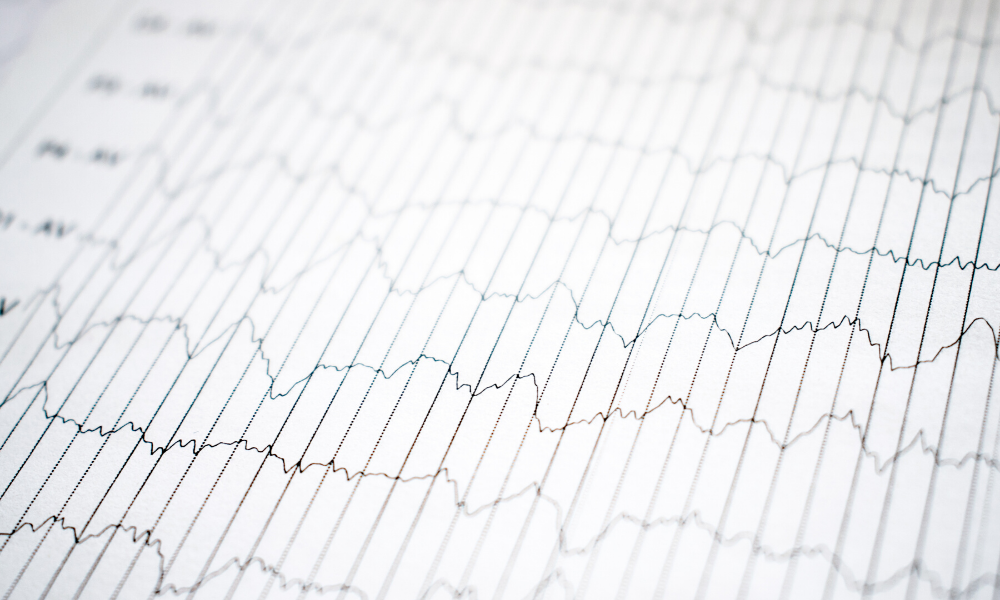
    Four simple periodic rhythms recorded in the EEG are alpha, beta, delta, and theta. These rhythms are identified by frequency (Hz or cycles/sec) and amplitude. The amplitudes recorded by scalp electrodes are in the range of microvolts (μV or 1/1,000,000 of a volt).

    rhythm Freq (Hz) Amp(μV)
    alpha 8-13 20-200
    beta 13-30 5-10
    delta 1-5 20-200
    theta 4-8 10

    Alpha: The four basic rhythms have been associated with various states. In general, the alpha rhythm is the prominent EEG wave pattern of an adult who is awake but relaxed with eyes closed. Each region of the brain had a characteristic alpha rhythm but alpha waves of the greatest amplitude are recorded from the occipital and parietal regions of the cerebral cortex. In general, amplitudes of alpha waves diminish when subjects open their eyes and are attentive to external stimuli although some subjects trained in relaxation techniques can maintain high alpha amplitudes even with their eyes open.

    Beta: Beta rhythms occur in individuals who are alert and attentive to external stimuli or exert specific mental effort, or paradoxically, beta rhythms also occur during deep sleep, REM (Rapid Eye Movement) sleep when the eyes switch back and forth. This does not mean that there is less electrical activity, rather that the “positive” and “negative” activities are starting to counterbalance so that the sum of the electrical activity is less. Thus, instead of getting the wave-like synchronized pattern of alpha waves, desynchronization or alpha block occurs. So, the beta wave represents arousal of the cortex to a higher state of alertness or tension. It may also be associated with “remembering” or retrieving memories.

    Delta and Theta: Delta and theta rhythms are low-frequency EEG patterns that increase during sleep in the normal adult.   As people move from lighter to deeper stages of sleep (prior to REM sleep), the occurrence of alpha waves diminish and is gradually replaced by the lower frequency theta and then delta frequency rhythms.

    Although delta and theta rhythms are generally prominent during sleep, there are cases when delta and theta rhythms are recorded from individuals who are awake. For example, theta waves will occur for brief intervals during emotional responses to frustrating events or situations.   Delta waves may increase during difficult mental activities requiring concentration. In general, the occurrence and amplitudes of delta and theta rhythms are highly variable within and between individuals.

  • Neurofeedback & Mental Health

    Neurofeedback & Mental Health

    Neurofeedback: a viable treatment for mental health issues?

    PHOTO BY TOM CROKE
    Lawrence M. Hirshberg, Ph.D., BCN, said neurofeedback is almost never the first treatment for mental health problems. Hirschberg is director of the NeuroDevelopment Center in Cambridge, Mass. and Providence, R.I., and a Brown University faculty member.

    The brain could be considered the communication center of the body, sending messages to every cell and keeping all systems running properly. But psychological or physical trauma can disrupt those signals. Researchers are finding that neurofeedback can repair broken connections and help restore functioning.

    A traumatic brain injury involves the tearing of white matter connections in the brain that cause the whole system to be “out of whack,” according to Diane Roberts-Stoler, Ed.D., owner of Dr. Diane Brain Health in North Andover, Massachusetts.

    She speaks from first-hand experience. In 1990, she suffered a stroke while driving, resulting in a head-on collision; fourteen years later she had a mini-stroke. Subsequently, two other separate accidents left her with concussions and traumatic brain injuries. During routine CAT scans and MRIs, doctors discovered a brain tumor and diagnosed permanent brain damage.

    Today, thanks to neurofeedback, Roberts-Stoler has proliferated in her work as a psychologist, speaker and author who focuses on brain, health, sports and performing arts psychology.

    “During a neurofeedback session, the clinician maps 19 points on the brain,” she explained. “The waves give the clinician a snapshot of the asymmetry, phase and cohesion in the brain. Neuroplasticity in the brain allows us to make new connections.”

    In her practice, Roberts-Stoler uses different types of neurofeedback, including a Low Energy Neurofeedback System (LENS) and quantitative electroencephalogram (QEEG) to confirm a diagnosis and then attempts to find the cause of the “disconnect.”

    Laurence M. Hirshberg, Ph.D., BCN, director of the NeuroDevelopment Center, located in Cambridge, Mass. and Providence, R.I., and faculty in the department of psychiatry and human behavior at Brown University, explained that neurofeedback records changes in brain function shown through EEG and functional magnetic resonance imaging (fMRI).

    When a patient presents, Hirshberg reviews previous therapies, because in most cases, neurofeedback is almost never the first approach to a mental health problem.

    “Ninety percent of patients have experienced multiple treatment failures/insufficiencies. Neurofeedback is only the first treatment in kids with ADHD whose parents choose not to use medication,” he said.

    Prior to initiating treatment, Hirshberg evaluates the patient’s diagnosis, existing research on how to achieve an effective pattern of functioning for the diagnosis and conducts a QEEG that he compares to a database showing normal brain activity to establish a baseline. He solicits the patient’s observations both before and after a session, which help to fine-tune the settings.

    According to Hirshberg, the neurofeedback protocol comprises two components: where to acquire the EEG signal, i.e., where to place the electrodes and what frequency to use.
    Before beginning treatment, Hirshberg instructs the client to be calm and patient.

    “There will be moments when the brain is not getting it. Those moments are as important as when things are happening,” he said. “It’s not volitional or intentional. It’s a different kind of learning.”

    He noted that the patient views a grid on the computer screen. Recordings are taken every half-second; when a goal is met one section of the grid fills in. “When targets are met, a version of thumbs up is given to the patient. Think of it as behavior reinforcement,” he added.

    Hirshberg reported that follow-up studies show neurofeedback to be effective across a spectrum of mental illnesses, including ADHD; PTSD; depression; generalized anxiety disorder; traumatic brain injuries and concussions; autism; sleep difficulties; attachment disorder; chronic fatigue and pain; and bipolar disorder.

    However results are unique to each patient. “When treating a patient, there are individual outcomes. In some cases, we might reduce sessions from two times a week to once per week to see if the symptoms decrease in between. Some patients come back for a booster if they have severe trouble. Some patients train at home,” he said.

    Neurofeedback causes no lasting adverse effects, according to Hirshberg, although there may be short-term issues. “For instance, in children with ADHD, neurofeedback can lead to difficulty falling asleep the night of the session. In such a case, we would adjust the dose and activation,” he said.

    “One other side effect has been tics when training for ADHD. We had to stop treatment for a couple of patients.”

    On its own neurofeedback can be helpful, but in some cases, patients engage in other therapies simultaneously.

    “We like to initiate neurofeedback with a level playing ground. We ask the patient if he intends to do another therapy or take medications,” Hirshberg said. “We don’t want too many variables starting at the same time. Approximately 60 percent are on medication during neurofeedback.”

    Mark Gapen, Ph.D., BCN, internship director at Community Services Institute, Inc. in Springfield, Mass., equates neurofeedback to “gym for the brain.” He sees the therapy as a way to access unconscious processes that are difficult to address through talk therapy. He pointed out though that “psychotherapy synergistically interacts with neurofeedback.”

    Training to use neurofeedback involves four days of didactic instruction as well as firsthand experience, Gapen reported.

    “As part of the certification process, you have to demonstrate that you have done 10 sessions on yourself,” he said. “I advise clinicians to start practicing right after completing the training. You will never master it, but you don’t want to lose what you’ve learned.”

    Unfortunately, insurers currently don’t reimburse specifically for neurofeedback, said Gapen. “I would like to see insurance companies reimburse on an integrated psychotherapy and biofeedback CPT code at a decent level. This would allow more clinicians to accept insurance for this work,” he said.

    Gapen also advocates for more neurofeedback-related education in professional psychology schools.

    “We won’t expand neurofeedback unless we integrate it into the curriculum. Few graduate programs provide training in neurofeedback. We need more institutional presence and younger clinicians in the field,” he said.

    Hirshberg reported that although some studies have demonstrated positive outcomes, a lot of work remains to be done. “There have been lots of claims of what neurofeedback can help, which are not always substantiated,” he said.

    Hirshberg designed and coordinated a study funded by the National Institute of Mental Health, which should provide more solid information on whether changes are connected to the EEG feedback procedure.

    By Phyllis Hanlon

  • Your Brain’s Waves

    Your Brain’s Waves

     Did you know your signature brain wave activity is unique to you.? It has a distinct rhythm and pattern that has developed over time and through habit, much like your own unique fingerprint.

    Brain training can help you develop new brain wave patterns that you might be lacking or needing more of for better functioning. For example, if you have difficulty focusing, Beta training will help the frontal lobes have better focus and attention. Or if you have trouble relaxing, theta and alpha programming will help with improved sleep and lowering anxiety. Through operant conditioning the brain learns to reorganize itself and see new ways to use its inherent plasticity. The HPN neurofeedback software whispers to your brain how to heal, much like a little wind in the sails of a toy boat in a tub allows it to skim across the water when you send a puff of air.

    Gamma waves are the fastest of the brainwave frequencies and signify the highest state of focus possible. They are associated with peak concentration and the brain’s optimal frequency for cognitive functioning. Nobel prize winning scientist, Sir Francis Crick believes that the 40Hz frequency may be the key to the act of cognition. 40 Hz is the window frequency used in all Brain Sync Gamma and Beta wave programs and where many new programs are headed for optimization. The research is very exciting for all of us in this field, and for you as a client wishing to “upgrade” your brain/mind and achieve a state of optimum.

    Can you use brain wave therapy to improve your life? The short answer is a rousing YES!  In and of itself, brain wave therapy will relax you, open your mind to new ideas, inspire you and let you think more creatively. Our brains want to learn and grow. Come experience the how at BraintrainingofNewEngland.com in beautiful Kittery, Maine. Packages available.


  • What about Soccer?

    What about Soccer?

    Information from Scientific American and Neuroscience Journals

    It has become clear that impact sports like football and boxing can cause long-term brain damage. Now soccer is coming under scrutiny. As research is amassed, it appears that excessively heading a soccer ball can injure a player’s brain.  Professional players such as Brandi Chastain, a star of the 1999 FIFA Women’s World Cup, are using this year’s tournament to call attention to the brain injury problem.  To learn about the latest science on soccer heading and brain injuries, Scientific American spoke to Robert Cantu, professor of neurosurgery at the Boston University School of Medicine and co-founder of the Sports Legacy Institute.

    What’s the scientific evidence for whether heading a soccer ball can cause brain damage?
    Our findings and the findings of other researchers show that heading a soccer ball can contribute to neurodegenerative problems, such as chronic traumatic encephalopathy. Researchers who’ve followed soccer players have seen a close relationship between the amount of heading that a player does and brain abnormalities. There’ve also been studies where researchers compared soccer players to swimmers, and swimmers’ brains look perfectly normal while the soccer players’ brains had abnormalities in their white matter fiber tracts. Nerve cells transmit their messages to other nerve cells by way of their fiber tracts, or axons, and if the brain is violently shaken enough, a person can have disruption of their fiber tracts.

    What are the effects of these brain abnormalities?
    Excessive shaking of the brain—excessive subconcussive and concussive trauma—can lead to cognitive symptoms, including memory problems as well as behavior and mood problems such as anxiety and depression. Other symptoms include trouble with sleep, light-headedness and headaches.

    Do researchers see this brain damage later in life, once someone has stopped playing soccer?
    We haven’t yet followed these abnormalities over years. Those studies are ongoing. Do those abnormalities clear up over time or do they not? We don’t know the answer yet. It’s probably some of both.

    Is there a threshold of force below which a person can safely head a ball?
    The science isn’t there yet. We don’t even have a threshold that predicts the linear and rotational accelerations needed to cause a concussion. The linear forces are measured in gravity, and we’ve measured hits in various sports as high as 150 g’s where people haven’t had concussions and we’ve had other individuals with hits as low as 50 to 60 g’s who’ve had concussions. The other kind of forces—the rotational or twisting forces—which are measured in radians per seconds squared, we also don’t know those forces needed to produce concussions.

    We also don’t have a good handle on the threshold needed to produce subconcussive trauma, which are blows to the head that don’t produce symptoms but do produce structural changes observable in neuroimaging.

    Why is it taking so long for researchers to understand the effects of concussive and subconcussive impacts on the brain?
    It’s a very complex issue. You have biomechanical forces that can be measured, like the linear and rotational acceleration. But we’re dealing with a human, not an inert object in a laboratory. There are a lot of biological factors that influence whether that human being has a concussion: How many concussions that person has had before, how severe those concussions were and how close together they occurred. Other factors include: age—it’s easier to be concussed at an earlier age than at an adult age, and the recovery is slower; neck strength—if you see the hit coming and you have a strong neck, you significantly reduce your chance of a concussion; hydration status—if you’re dehydrated, you’re more likely to have a concussion; and sex—women are more easily concussed than men.

    What’s your advice for soccer parents? Do you recommend an age cutoff for heading a soccer ball?
    We recommend that youngsters under the age of 14 not head the ball in soccer, not play tackle football and not full-body check in ice hockey. Impacts to the head are more damaging under that age, due to a number of structural and metabolic reasons. The brains of youngsters are not as myelinated as adult brains. Myelin is the coating of the neuron fibers—kind of like coating on a telephone wire. It helps transmission of signals and it also gives neurons much greater strength, so young brains are more vulnerable.

    Youngsters also have disproportionately big heads. By the age of five, their heads are about 90 percent of their adult circumference, but the neck has not nearly developed to that point. They have big heads on very weak necks and that bobblehead-doll effect means you don’t have to impact the head as hard to cause damage.

    Soccer: the most popular team sport in the world. Millions of people play the game and over a billion people watch the World Cup soccer championship.

    What a game! Where else do people use their heads to bounce balls going 100 kilometers/hour?
    Although soccer is a relatively safe sport, the game does involve contact. This contact can be:

    • player-to-player
    • player-to-ground
    • player-to-goalpost
    • player-to-ball
    As you might expect, most (50-80%) soccer injuries affect the feet and legs. However, the American Academy of Pediatrics concluded that the contact that occurs while playing soccer is at the same level as during boxing, football, ice hockey, lacrosse, rodeo and wrestling and field hockey.Head injuries account for between 4% and 22% of all soccer injuries. Can this contact cause brain damage? Let’s look at the data.
  • Concussion and Neurofeedback

    Concussion and Neurofeedback

    What Is High Performance Neurofeedback?

    HPN High Performance Neurofeedback is a type of brainwave-based biofeedback that has shown clinical efficacy in addressing the symptoms of Traumatic Brain Injury (TBI), Post-Traumatic Stress Disorder (PTSD), Post-Concussive Syndrome, Anxiety, Depression, and Attention Deficit issues (AD/HD).

    HPN is an integrative approach to neurofeedback, allowing the brain to heal itself following injury.  Patients report that they have experienced increased neurological function thereby allowing more freedom, clarity, vitality and ease in their lives after receiving treatment with HPN.

    Watch and Listen to what the Professionals and Clients have to say about HPN and Concussion

    Call for a Free demonstration of how Neurofeedback can enhance your quality of life and improve overall functioning.

  • 10 Reasons Smiling Benefits You!

    10 Reasons Smiling Benefits You!

    Mother Teresa, one of my personal role models, once said “We shall never know all the good that a simple smile can do.” We have been smiling all our lives. And to some degree, we already possess the inherent knowledge that smiling not only feels good but it actually does good too.

    Yet many of us shy from smiling as often as we ought to. I’m not the one to judge; we all have our own issues in life. But way too often, we actually punish ourselves by choosing not to smile when we really should be smiling our brains off!

    So, the next time you get the opportunity to smile, just smile, and enjoy all that positivity it spawns. If you’re not convinced, well here below are reasons you should be.

    1. Smiling makes you look attractive.

    Your smile tells a great deal about you. It really is true. Not convinced? Try this. Try to think of some of the people you’re attracted to. Done? How many of those were actually smiling? Well, you don’t have to tell me because I already know the answer.

    We are naturally hardwired to be attracted to people who smile. Something about seeing someone smile builds up all this positive energy in our minds. And every time we see them, we associate them with all that positive energy.

    So, the next time you’re around a bunch of friends or strangers (it really doesn’t matter) and you want to attract attention, just smile.

    2. Smiling makes you happier.

    Now this is as true as it is strange. Smiling actually makes you, the person smiling, happier regardless of the situation. Normally we are hardwired to smile only during pleasant situations.

    The brain in turn releases endorphins which lowers stress and improves your overall mood, hence making the situation pleasant. But it being a voluntary action, we can actually trick the brain into believing that an otherwise dull situation is actually pleasant by simply smiling.

    So the next time you’re bored, or god forbid sad, try this — kick back, take a few deep breaths and smile. Just smile, and watch your brain work its magic!

    3. Smiling improves your immune system.

    It has been reported that when you’re smiling, the body releases more white blood cells than it usually does. And the prime purpose of white blood cells are to protect the body against both infectious diseases and foreign invaders.

    So, smiling more often actually makes your body more immune to diseases and hence makes you healthier. In fact, that is the prime reason why so many famous celebrities are invited to children’s hospitals. If they can get the children to smile, that will, to some degree, boost their overall health.

    So with this in mind, don’t just go smiling on your own from now on. Make others smile too!

    4. Smiling makes you a better leader.

    Smiling encourages trust. We can all agree to that. A person who is constantly smiling appears more trustful than someone who is not. And what more do we look for in a great leader than trust?

    Take a look at all the popular leaders of the world. I don’t say the great leaders, because not all of them may be popular. But the popular ones, who are also the more successful, smile more often than others.

    This is true for leadership in all levels. Fear and intimidation may work like a charm for a while, but they never last long. The leaders who truly make a mark in history are the ones that smile.

    5. Smiling helps you make a better impression.

    Have you ever been in a room with strangers and struggled to socialize to the extent you wish you could? Wouldn’t you in turn want to be that person who can get along with everyone in the room in a jiffy?

    Well, if you look at the people who can actually do this, you will find that the key to their success is, you guessed it, smiling. Yes, they’re smiling more than you are. But guess what? Their personality is no match for yours. Put on more smiles, and you’ll be sweeping all the charm towards your direction in no time!

    6. Smiling makes you more productive.

    We talked about the value of smiling as a mood booster earlier, but it doesn’t end there. The effect of one good smile follows you to your workplace and in fact, helps improve your overall performance there.

    And this is actually backed by research. A 2010 research led by Andrew Oswald, a Professor of Economics at Warwick Business School, proved that employees who smile more often are significantly more productive and creative in the workplace.

    So whether you’re an employee or an employer, smile more often and make others around you smile more often too. It will be great for everyone involved.

    7. Smiling makes you more approachable.

    Imagine yourself in a room with two people you’ve never met before. You need toask them a favor.  And it’s not just any favor. It would actually be of mutual benefit. Both persons are on their phones. One is smiling, the other is not.

    After a while, they put their phones down, and you’re ready to approach them. Which of the two would you go to, or at least go to first? Once again, I know the answer.

    There is something about smiling that attracts trust. It makes the person wearing the smile appear warm and kind. The very qualities that make one approachable.

    8. Smiling makes you more confident.

    Not only does smiling make you look more confident, it actually makes you confident in the long term. If you’re someone who smiles often, you tend to attract more attention, trust and respect than others around you.

    This in turn makes you look for the attention, trust and respect in every situation which is the hallmark of confidence — believing that you deserve something.

    And how do you do that? The only way you’ve ever known. Smiling more! Which in turn makes you even more confident. It is almost like a chain reaction. A never ending cycle that only makes you more confident and happier with every iteration.

    9. Smiles are contagious.

    Well, they are, aren’t they?  How many times have you seen someone smile and get no reaction from the other party? Very few, right? People smile, even if to be polite. And we’ve talked about the seer effect of just smiling, even in pretense.

    When you’re smiling, you’re actually asking the other party to join in on the fun with you. And 99 percent of the time, they do join you. Smiles are one of the most contagious things in the world, behind probably only to laughter, which is in a way just a louder smile. So smile more, and spread the joy!

    10. Smiles are free.

    We have discussed a lot of benefits of smiling. But we are yet to discuss the most important reason you should smile more often –- because they’re free! When was the last time you blew away something so beneficial yet absolutely free? Smile, just smile.

    You’ll be happier and you’ll make everyone around you feel better.  Dale Carnegie wrote this on his book “How to Win Friends and Influence People”: “A smile costs nothing, but creates much. It enriches those who receive, without impoverishing those who give. It happens in a flash and the memory of it sometimes lasts forever.” Old Carnegie sure was onto something!

    This article is credited to Lifehack.  Loved it so much I have posted it to share with you.

  • Retreat Center for Mind-Body

    Retreat Center for Mind-Body

    Mind-Body Retreat Center

    Experience a Mind and Body Vacation learning experience.  Your retreat includes organic breakfast, 5 min. yoga routine & daily access to Brain Training sessions with coaching on 2 acres of walking paths & labyrinth for an outstanding experience in mindfulness. (Treatment for attentional issues, anxiety, depression, stress management and optimization for the whole of you!)

  • Neurons that fire together…

    Neurons that fire together…

    Neurons that Fire Together Wire Together

      What does THAT mean for you? How can you retrain your brain cells to work more in your favor towards happiness and ease?

     In 2013 Dr. Thomas Sudhof won the Nobel Prize in Medicine for the discovery of synaptic transmission–how brain cells communicate via chemicals. He credits his childhood Bassoon teacher with being his most influential teacher. Think about THAT! He currently works in the School for Medicine at Stanford. He is Professor of Molecular & Cellular Neurology, Psychiatry and Physiology.  Pretty impressive CV.

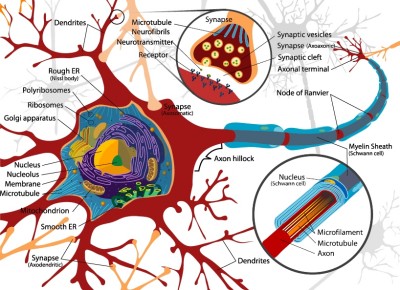
    Our brain cells communicate with one another via synaptic transmission–one brain cell releases a chemical (neurotransmitter) that the next brain cell absorbs.  This communication process is known as “neuronal firing.”  When brain cells communicate frequently, the connection between them strengthens.  Messages that travel the same pathway in the brain over & over begin to transmit faster & faster.  With enough repetition, they become automatic.  That’s why we practice things like hitting a golf ball–with enough practice, we can go on automatic pilot.

    Psychologists have long known that negative thought processes follow this same pattern–the more we think about, or “ruminate,” on a negative thought, the more entrenched the thought becomes.  Negative and traumatic thoughts also tend to “loop”–they play themselves over and over until we do something consciously to stop them.

    The more these negative thoughts loop, the stronger the neural pathways become, and the more difficult it becomes to stop them!  This is why thoughts that cause depression, anxiety, panic, obsessions, and compulsions can become so difficult to combat.  And along the way, these thoughts stir up emotional as well as physiological reactions.

    Psychotherapy, regardless of the orientation, attempts to stop this process. Neurofeedback gets to the heart of the issue. A brain map can identify where there are too many or too few synapses firing and give you real time information on how to either quiet or encourage firing in specific regions of the brain so that you can have a better operating system.

    Come by for a free demonstration at Brain Training of New England to learn more about your brain -your command central.


  • Brain Mapping

    Brain Mapping

    Non-invasive QEEG Brain Mapping is analogous to a physician performing a throat culture on a patient with a throat infection to determine which antibiotic would best eradicate the infection.  Brain Mapping gives answers to what’s going on below the surface.  The electrodes are placed on the head, and read the electrical activity coming off of the brain.

    The Brain Map analysis gives us important information to more effectively help improve the quality of life and productivity of each individual patient.  Each segment of the brain produces brain wave activity that can be measured and will indicate the level of functioning of that region.  Treatment is then guided by the map.  A brain map is done prior to treatment and after about 10 sessions.

    QEEG (Quantitative Electro- encephalogram) or Brain Mapping is an essential diagnostic procedure for developing non-drug treatment protocols for Attention and focus issues, Autism, Learning Disorders, Anxiety, Depression and Stress Related Illnesses.

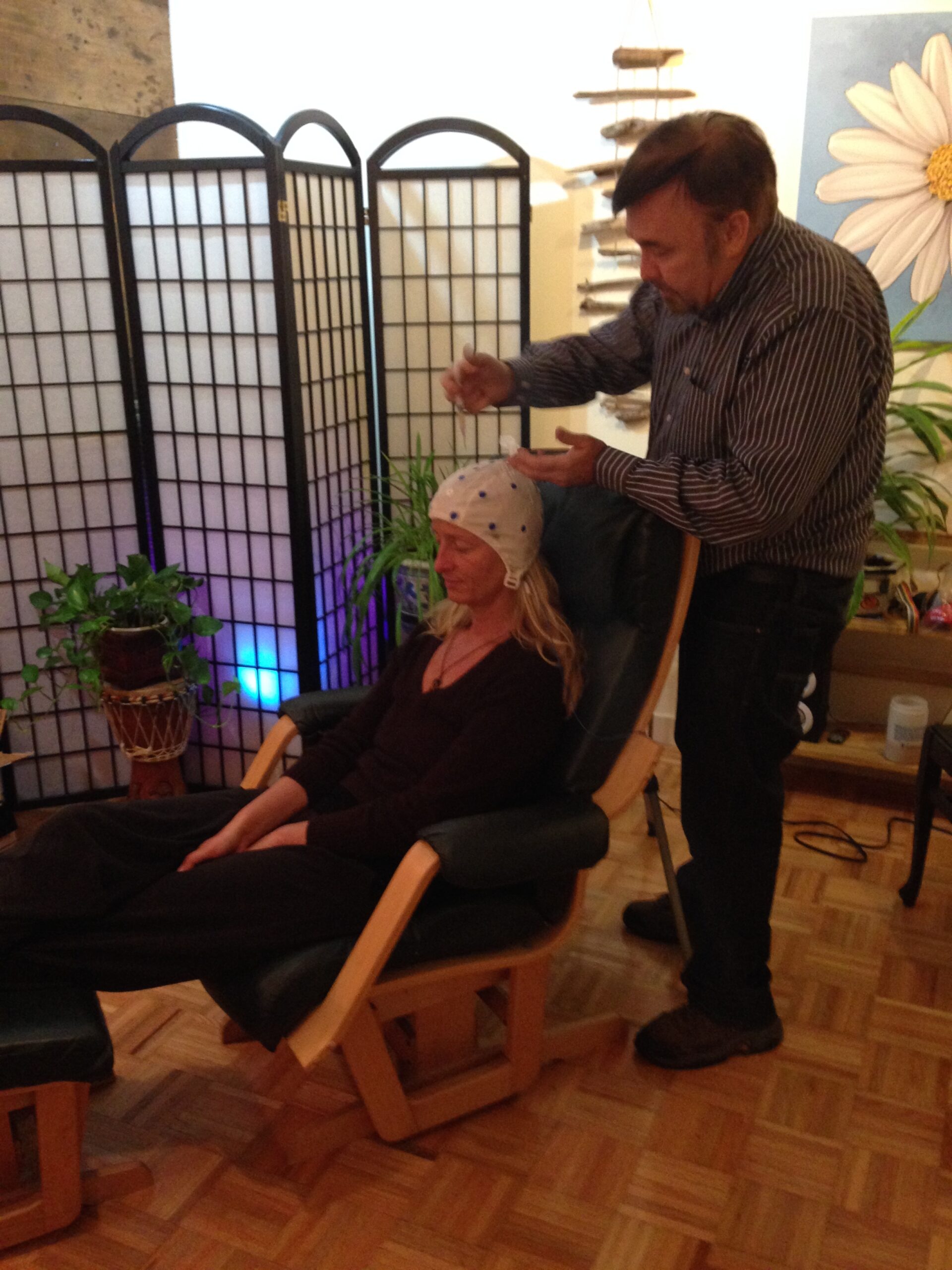
    In a safe, spa-like space you will sit comfortably for about an hour with a non-invasive electrode cap on your head while we take a reading of the brain’s activity.  This map will then guide our treatment for your sessions.

    Online scheduling

  • Using Weighted Blankets

    Using Weighted Blankets

    Deep pressure touch stimulation (or DPTS) is a type of therapy that almost anyone can benefit from. Similar to getting a massage, pressure exerted over the body has physical and psychological advantages. According to Temple Grandin, Ph.D., “Deep touch pressure is the type of surface pressure that is exerted in most types of firm touching, holding, stroking, petting of animals, or swaddling. [sic] Occupational therapists have observed that a very light touch alerts the nervous system, but deep pressure is relaxing and calming.”

    Traditionally, weighted blankets are used as part of occupational therapy for children experiencing sensory disorders, anxiety, stress or issues related to autism. “In psychiatric care, weighted blankets are one of our most powerful tools for helping people who are anxious, upset, and possibly on the verge of losing control,” says Karen Moore, OTR/L, an occupational therapist in Franconia, N.H.

    So, How Does It Work?

    A weighted blanket molds to your body like a warm hug. The pressure also helps relax the nervous system. It’s a totally safe and effective non-drug therapy for sleep and relaxation naturally. Psychiatric, trauma, geriatric, and pediatric hospital units use weighted blankets to calm a patient’s anxiety and promote deep, restful sleep. In a similar way to swaddling comforting an infant, the weight and pressure on an adult provides comfort and relief.

    When pressure is gently applied to the body, it encourages serotonin production, which lifts your mood. When serotonin naturally converts to melatonin, your body takes the cue to rest.

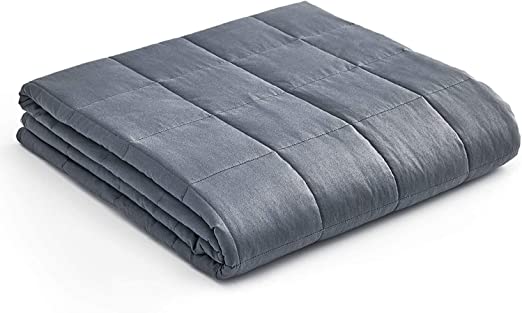
    Weighted blankets are typically “weighted” with plastic poly pellets that are sewn into compartments throughout the blanket to keep the weight properly distributed. The weight of the blanket acts as deep touch therapy and acts on deep pressure touch receptors located all over your body. When these receptors are stimulated, the body relaxes and feels more grounded and safe, and clinical studies suggest that when deep pressure points are triggered they actually cause the brain to increase serotonin production.

    Weighted blankets are especially effective at alleviating anxiety. A 2008 study published in Occupational Therapy in Mental Health showed that weighted blankets offered safe and effective therapy for decreasing anxiety in patients. These results were confirmed in a 2012 study published in Australasian Psychiatry, which indicated that weighted blankets successfully decreased distress and visible signs of anxiety.
    More Than Just Insomnia And Anxiety!

    Depression, anxiety, aggression, OCD, PTSD, and bi-polar disorder have all been linked to low serotonin levels in the brain, which weighted blankets are reported to assist with. In addition, people battling with depression, mania, anxiety, trauma, and paranoia, or undergoing detoxification have reported relief from symptoms.

    Weighted blankets have reportedly helped patients suffering from a lot of different diseases and disorders, from autism, to Tourette’s, Alzheimer’s Disease, Cerebral Palsy, Restless Leg Syndrome, and even can help alleviate menopausal symptoms!
    Using Weighted Blankets

    The weight of the blanket will depend on your size and personal preference, but the typical weight for adults is around 15 to 30 pounds in the blanket. Experts recommend seeking the guidance of a doctor or occupational therapist if you have a medical condition. Do not use weighted blankets if you are currently suffering from a respiratory, circulatory, or temperature regulation problem, or are recuperating post surgery.
    Where To Buy?

    There are many website where you can purchase a weighted blanket in tons of choices of fabric and weight, or you can even make your own! There are specifically blanket shops, such as Magic Blanket, created by product developer, Keith Zivalich in California, which have children’s blankets that are 36 inches wide, and adult blankets, which run 42 inches across. Another good option is Mosaic Weighted Blankets which sells all-cotton versions. Amazon, Etsy and Ebay all sell them, and therapy and special needs stores like National Autism Resources also sells them. You can find them in a variety of sizes, colors, and fabrics, and this is one simple change that can make a HUGE difference in your life!